Don't Get Old

Kosovo is a small country: It is also one of the youngest in Europe. The average age of its 1.78m people is 30 and only 6.2% are 65 and older.1 With limited voting clout the elderly have long been neglected by our politicians. Unlike amongst some of our neighbours we do not have a powerful pensioners’ party. But the nature of Kosovar society does not help either. Because the elderly are almost always cared for by their families, their interests are neglected by society at large. They are ignored by civil society and there is little incentive for government or the private sector to establish specialised care facilities for the elderly, help those who have lost their independence or ensure access to proper social services which are today either nonexistent or ill-adapted to the nature of our society. This is the context of this study into the living conditions of Kosovo’s elderly who are here defined as anyone aged 65 or over.

To read the full report, click here: Don't Get Old  

Engaging in Public Consultation

This toolkit was prepared in order to provide an overview of international and domestic standards and principles on public consultations, and advocacy efforts during law and policy making processes within the Government. Its central aim is to provide guidance to civil society on how to engage in consultation processes in Kosovo, following especially the adoption of the Government Regulation 5/2016 on Minimal Standards for the Public Consultation Process, on 29 April 2016 (hereinafter as “Government Regulation No. 5/2016”).

To read the manual, click here: Engaging in Public Consultation

Work and Employment

This report is part of the activities that are planned for the implementation of the Support to Social Partners (SSP) project, funded by EU Office in Kosovo. Specifically, the project contributes to “developing skills and knowledge of social partners in legislation drafting, legal research and analysis”, “strengthen the administrative and management capacities of social partners”, “strengthen the capacities of social partners in advocacy, lobbying and negotiations”, and “facilitating the organizational reform of social partners”.

The report represents direct support to the work of the Social and Economic Council (SEC), which legally is in charge of facilitating tripartite social dialogue in the country. This report is the SSP project contribution to feeding information collected in the field to the discussions in SEC. Active secretarial support has also been provided to SEC, which combined with digitalization of SEC materials, is aimed at improving process management within this body.

The project is streamlined with ongoing processes, and has taken into consideration all major events and programs taking place during the implementation period. The approach of harmonizing all project activities into ongoing processes of other actors is perceived to be the most adequate for obtaining the most qualitative results. As such, some of the project activities are dependent on processes and stakeholder cooperation, and cannot be implemented without their participation.

The purpose of this survey with the general population is to assess the following:

  • The level of public awareness and knowledge about social policies;
  • The level of public opinion and attitude towards welfare systems and level of protection desired by citizens;
  • Public attitude towards illegal migration;
  • Expectations and attitudes of the general public towards social and employment policies;
  • Individual savings habits and attitudes of the general public.

The findings from this research should be used by members of the Social Economic Council and the Ministry of Labour and Social Welfare as citizen feedback on priority policies and reliable information to be used for decision-making. Hence, institutional representatives are the primary audience of this report, but other stakeholders such as social partners, international donor organizations, Kosovo Parliament, political parties, Civil Society Organization (CSO’s), media, as well as the general public, are also targeted with this report. Given the scarcity of literature and research in the topics covered by the report, the information presented herein can also be used by students and academia in their work.

Click here to read the full report: Work and Employment

Citizens Perception and Attitudes

This report is part of the activities that are planned for the implementation of the Support to Social Partners (SSP) project, funded by EU Office in Kosovo. Specifically, the project contributes to “developing skills and knowledge of social partners in legislation drafting, legal research and analysis”, “strengthen the administrative and management capacities of social partners”, “strengthen the capacities of social partners in advocacy, lobbying and negotiations”, and “facilitating the organizational reform of social partners”.

The report represents direct support to the work of the Social and Economic Council (SEC), which legally is in charge of facilitating tripartite social dialogue in the country. This report is the SSP project contribution to feeding information collected in the field to the discussions in SEC. Active secretarial support has also been provided to SEC, which combined with digitalization of SEC materials, is aimed at improving process management within this body.

The project is streamlined with ongoing processes, and has taken into consideration all major events and programs taking place during the implementation period. The approach of harmonizing all project activities into ongoing processes of other actors is perceived to be the most adequate for obtaining the most qualitative results. As such, some of the project activities are dependent on processes and stakeholder cooperation, and cannot be implemented without their participation.

The purpose of this survey with the general population is to assess the following:

  • The level of public awareness and knowledge about social policies;
  • The level of public opinion and attitude towards welfare systems and level of protection desired by citizens;
  • Public attitude towards illegal migration;
  • Expectations and attitudes of the general public towards social and employment policies;
  • Individual savings habits and attitudes of the general public.

Gjetjet në këtë hulumtim janë reagime të qytetarëve dhe janë të besueshme për t’u përdorur për vendimmarrje. Këto gjetje, përdoren nga anëtarët e Këshillit Ekonomik Social dhe Ministria e Punës dhe Mirëqenies Sociale. Për këtë arsye, audienca e këtij raporti, janë: përfaqësuesit e institucioneve, organizatat donatore ndërkombëtare, Kuvendi i Kosovës, partitë politike, Organizatat e Shoqërisë Civile , mediat, si dhe publiku i gjerë.

Click here to read the full report: Citizens Perception and Attitude

Social Standards and Living

This report is part of the activities that are planned for the implementation of the Support to Social Partners (SSP) project, funded by EU Office in Kosovo. Specifically, the project contributes to “developing skills and knowledge of social partners in legislation drafting, legal research and analysis”, “strengthen the administrative and management capacities of social partners”, “strengthen the capacities of social partners in advocacy, lobbying and negotiations”, and “facilitating the organizational reform of social partners”.

The report represents direct support to the work of the Social and Economic Council (SEC), which legally is in charge of facilitating tripartite social dialogue in the country. This report is the SSP project contribution to feeding information collected in the field to the discussions in SEC. Active secretarial support has also been provided to SEC, which combined with digitalization of SEC materials, is aimed at improving process management within this body.

The project is streamlined with ongoing processes, and has taken into consideration all major events and programs taking place during the implementation period. The approach of harmonizing all project activities into ongoing processes of other actors is perceived to be the most adequate for obtaining the most qualitative results. As such, some of the project activities are dependent on processes and stakeholder cooperation, and cannot be implemented without their participation.

The purpose of this survey with the general population is to assess the following:

  • The level of public awareness and knowledge about social policies;
  • The level of public opinion and attitude towards welfare systems and level of protection desired by citizens;
  • Public attitude towards illegal migration;
  • Expectations and attitudes of the general public towards social and employment policies;
  • Individual savings habits and attitudes of the general public.

The findings from this research should be used by members of the Social Economic Council and the Ministry of Labour and Social Welfare as citizen feedback on priority policies and reliable information to be used for decision-making. Hence, institutional representatives are the primary audience of this report, but other stakeholders such as social partners, international donor organizations, Kosovo Parliament, political parties, Civil Society Organization (CSO’s), media, as well as the general public, are also targeted with this report. Given the scarcity of literature and research in the topics covered by the report, the information presented herein can also be used by students and academia in their work.

Click here to read the full report: Social Standards and Living

Përfshirja e Perspektivës Gjinore në Praktikë

Synimi i arritjes së barazisë gjinore në Kosovë ka rezultuar me angazhime konkrete në përfshirjen e objektivave të barazisë gjinore në nivelin qendror dhe atë lokal, nga ana e institucioneve qeveritare, shoqërisë civile, organizatave ndërkombëtare, aktivisteve si dhe ekspertëve. Por, me gjithë përpjekjet për ta trajtuar barazinë gjinore në çdo fushë të jetës së përditshme nga këta akterë, kjo ende nuk është një realitet në praktikë. Gratë dhe burrat në Kosovë nuk gëzojnë të drejta të barabarta, prandaj ende vazhdojnë pabarazitë shoqërore, politike, ekonomike dhe kulturore. Këto pabarazi janë rezultat i formësimeve shoqërore të bazuara në stereotipe të shumta gjinore të pranishme në familje, në jetën politike dhe publike. Në të njëjtën kohë, këto janë fusha në të cilat është e mundur të veprohet, të përvetësohen qasje të reja, dhe, përgjithësisht, të iniciohet një ndryshim më i madh.

Ky Udhëzues ka për qëllim të rrisë kapacitetet dhe aftësitë e politikëbërësve duke ofruar hapa të thjeshtë e praktikë në drejtim të përfshirjes gjinore. Ai synon që përfshirja gjinore të bëhet pjesë qendrore e programeve dhe politikave në të ardhmen.

Kliko këtu për të lexuar udhëzuesin – Përfshirja e Perspektivës Gjinore në Praktikë – Udhëzues – 

Minimum Wage Study

The purpose of this study is to assess the methodologies and practices that are used to set minimum wages and the indicators that need to be taken into account, with the aim of informing the process and dialogue between stakeholders in Kosovo on setting the minimum wage. In no way does this study aim to recommend a certain level or method of setting the minimum wage, as this can only be a product of dialogue between stakeholders. The main aim is to illustrate key considerations to have in mind while going forward on a decision on the methodology, and to highlight the overall policy and socio-economic implications of any policy changes in the context of Kosovo.

Click here to read the full report: Minimum Wage Study

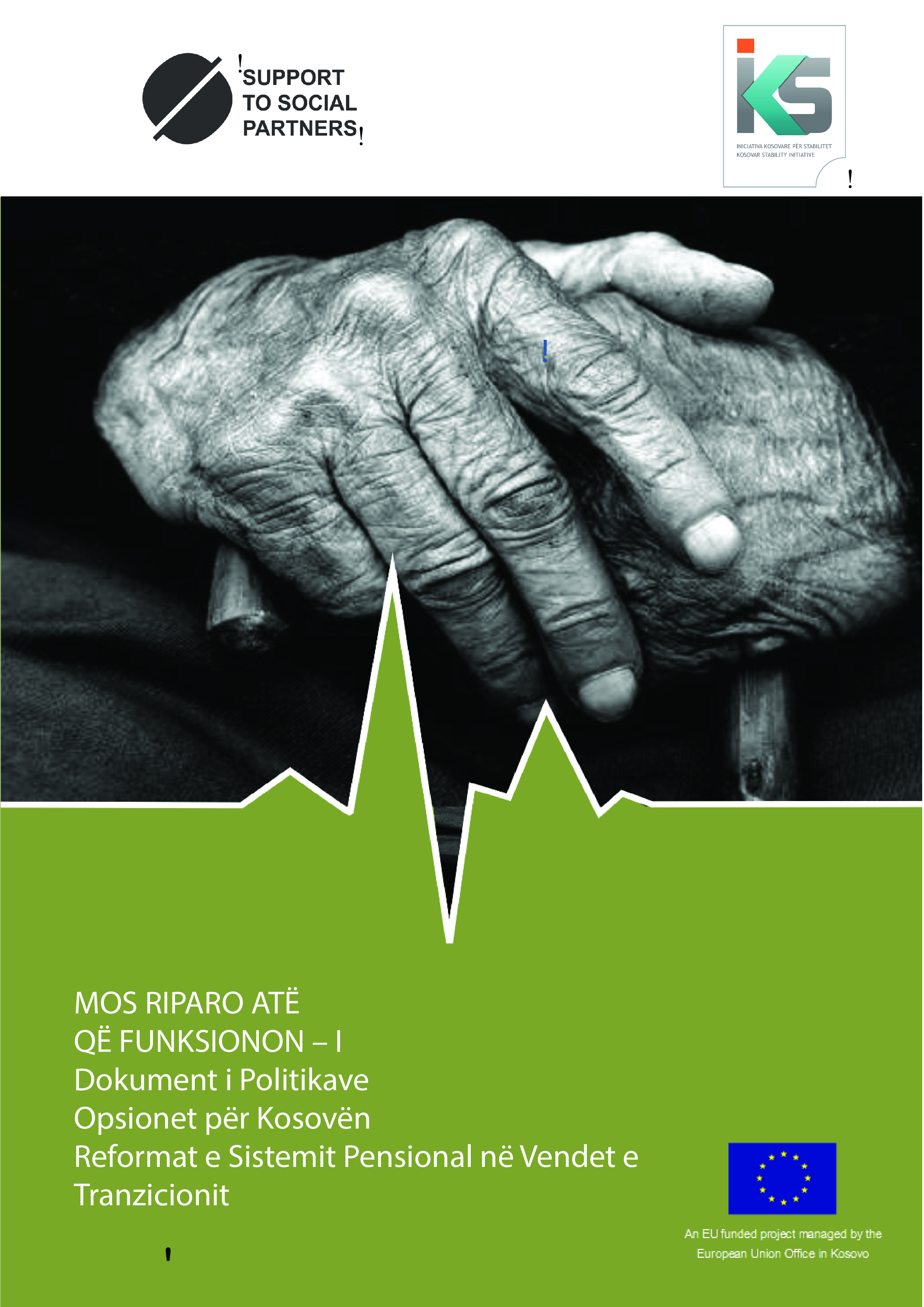
Don't Fix what Ain't Broke; Policy Brief Options for Kosovo Reform of Pensions Systems in Transition Countries

The paper aims to present the challenges as well as the weaknesses and shortcomings that characterize the pension systems in transition countries. Its objective is to introduce a number of policy options to the Ministry of Labor and Social Welfare and the Government of Kosovo regarding the reform of the pension system, in order to improve services and care capacities for the needs of the elderly.

Click here to read the full report: Don't Fix What Ain't Broke