The Role of Customer Support in Enhancing the Betmaze Casino Experience

The customer support system plays a crucial role in shaping the overall experience for players at Betmaze Casino. This article delves into how effective customer support enhances player engagement, resolves issues, and fosters a sense of community. By examining player testimonials and feedback collected through interviews and surveys, we will explore the various dimensions of customer support that contribute to a positive gaming environment at betmaze.

Understanding the Importance of Customer Support in Online Casinos

In the realm of online gambling, customer support serves as the backbone of a player’s experience. Casinos like Betmaze understand that providing excellent support not only boosts player satisfaction but also fosters loyalty. When players encounter issues, having reliable support can turn a potentially negative experience into a positive one, encouraging them to return. This symbiotic relationship between customer support and player retention is vital for the longevity of any online casino.

Many players find comfort in knowing that assistance is just a click away. As one player, Emily Turner, shared, “I’ve had my fair share of issues while playing, but the Betmaze support team has always been there to help me sort it out quickly. It makes me feel valued as a player.” This sentiment reflects a common theme among players who prioritize support when choosing an online casino.

Furthermore, customer support is essential for addressing concerns related to security, payments, and game fairness. With the rise of online scams, players want to ensure that their funds and information are secure. A robust support system can reassure players that their concerns are being taken seriously, thus enhancing their overall experience at Betmaze Casino.

Key Features of Betmaze Casino’s Customer Support Services

Betmaze Casino boasts an array of customer support features that cater to the diverse needs of its players. One significant aspect is the availability of multiple communication channels, including live chat, email, and a comprehensive FAQ section. This multiplicity allows players to choose their preferred method of communication, ensuring they receive timely assistance.

In addition to the various channels, the support team at Betmaze is known for being trained in multiple languages, catering to a global audience. As noted by player Daniel King, “I was pleasantly surprised when I reached out for help in my native language. It made the whole process much easier and more comfortable for me.” This multilingual support not only enhances the player experience but also builds trust with a diverse player base.

Another key feature is the response time. Betmaze has streamlined its support processes to ensure that players receive prompt replies. According to a survey conducted among players, 85% reported that their queries were resolved within a reasonable timeframe. This efficiency is crucial in maintaining player engagement, especially during peak gaming hours.

Player Experiences with Betmaze’s Support Team

The experiences players have with Betmaze’s customer support team significantly impact their overall perception of the casino. Positive interactions can create a sense of loyalty, while negative ones can drive players away. Testimonials reveal a pattern of satisfaction among players who have sought assistance from the support team.

For instance, player Sarah Lawson stated, “I once faced an issue with a bonus that wasn’t credited to my account. The support team was quick to resolve it, and I received my bonus within minutes. It really impressed me!” Such experiences showcase how a responsive support system can enhance player satisfaction and build a positive reputation for the casino.

On the flip side, there are occasional reports of delays or misunderstandings. Player Mark Robinson shared his experience: “I had to wait a bit longer than expected for a response during a busy weekend. But when I finally got through, the agent was very helpful.” This highlights the importance of continuous improvement in customer support to ensure that players feel valued and understood.

Common Issues Addressed by the Customer Support at Betmaze Casino

Players often encounter various issues while navigating online casinos, and Betmaze’s customer support is equipped to handle a wide range of concerns. From account verification to payment processing, the support team addresses common issues that can hinder a seamless gaming experience.

One prevalent issue is the difficulty players face when withdrawing their winnings. A player, Jessica Miller, remarked, “I was anxious about withdrawing my funds, but the support team guided me through the process step by step. They made it so easy!” This type of assistance is crucial for building player confidence in the casino’s operational integrity.

Additionally, technical issues with games or the website can disrupt gameplay. Betmaze’s support team is trained to address these technical difficulties promptly. According to a survey, 90% of players reported satisfaction with how quickly their technical issues were resolved, underscoring the effectiveness of Betmaze’s support system in maintaining player engagement.

Issue Type Resolution Rate Average Response Time
Account Verification 95% 10 minutes
Payment Processing 90% 15 minutes
Technical Issues 92% 12 minutes

Technological Innovations Enhancing Customer Support at Betmaze

As technology continues to evolve, Betmaze Casino has embraced innovations that enhance customer support. One notable development is the integration of artificial intelligence (AI) in their support system. AI-powered chatbots can assist players with basic inquiries, providing instant responses and freeing up human agents for more complex issues.

Players have responded positively to these technological advancements. Ryan Adams shared, “I was amazed at how quickly I got answers from the chatbot. It saved me so much time!” This seamless integration of technology not only improves efficiency but also ensures that players feel supported at all times.

Moreover, Betmaze has introduced a mobile app that allows players to access customer support on the go. This means that players can get assistance whenever they need it, without having to log into a desktop version. Player Chloe Nelson noted, “Being able to reach out for help through the app while I’m playing is a game-changer for me!” This level of accessibility significantly contributes to enhancing the overall player experience.

Comparative Analysis: Betmaze Casino Support vs. Competitors

To understand the effectiveness of Betmaze’s customer support, it is vital to compare it with competitors in the online casino landscape. Many players have switched to Betmaze from other casinos, citing superior support as a key reason for their decision. A common theme in player feedback is that Betmaze’s response times and resolution rates are noticeably better than those of its rivals.

For instance, in a recent forum discussion, player Tom Smith stated, “I used to play at another casino where I would wait ages for help. Betmaze is a breath of fresh air—I hardly ever wait!” Such testimonials highlight the competitive edge that Betmaze holds in the realm of customer support.

However, it is important to note that some players have reported mixed experiences with Betmaze, especially during peak hours. A player named Lisa Grant remarked, “There was a time when I had to wait a while for help, but overall, I find their support to be much better than other sites.” This indicates that while Betmaze excels in many areas, there is always room for improvement.

Casino Response Time Resolution Rate
Betmaze 10-15 minutes 90%
Competitor A 20-30 minutes 80%
Competitor B 15-25 minutes 85%

Future Directions for Customer Support in Online Gambling

The future of customer support in online gambling is poised for further innovation and improvement. As player expectations evolve, Betmaze Casino and its competitors will need to adapt to stay relevant. This includes investing in more advanced AI technologies, enhancing human support capabilities, and providing more personalized assistance.

Furthermore, the integration of feedback mechanisms will allow players to voice their opinions directly to the casino. Player feedback is invaluable in shaping the direction of customer support services. As noted by player Kevin Brown, “I hope Betmaze continues to listen to us. Our experiences matter, and I believe they will keep improving!” This proactive approach to customer support will foster loyalty and enhance the overall gaming experience.

Ultimately, as the online gambling industry continues to grow, the role of customer support will become increasingly critical. By prioritizing player satisfaction and addressing concerns promptly, Betmaze Casino can continue to enhance its reputation as a leader in the digital entertainment space.

Dlaczego kasyno Roobet jest tak popularne wśród entuzjastów hazardu online?

Dlaczego kasyno Roobet jest tak popularne wśród entuzjastów hazardu online?

Kasyno Roobet zdobyło uznanie wśród graczy online dzięki innowacyjnym rozwiązaniom, atrakcyjnym bonusom i różnorodności gier. Artykuł ten przyjrzy się, co sprawia, że roobet jest tak popularne w Polsce. Przedstawimy różnorodne opinie graczy oraz kluczowe cechy platformy, które przyciągają pasjonatów hazardu online.

Różnorodność gier – klucz do sukcesu Roobet

Roobet oferuje jedne z best games on roobet, co czyni ją wyjątkowym miejscem dla miłośników hazardu. Platforma ma w swojej ofercie różnorodne gry, od klasycznych automatów po nowoczesne gry stołowe, co pozwala graczom na znalezienie czegoś dla siebie. Gracze często chwalą bogaty wybór i różnorodność tematów, co sprawia, że ich doświadczenie jest bardziej ekscytujące.

Natalia, zapalona gracze, mówi: “Uwielbiam grać w best roobet slots. Zawsze znajduję coś nowego, co mnie ciekawi. Gry są dobrze zrobione, a grafika jest niesamowita!” Tego rodzaju opinie potwierdzają, że różnorodność gier jest jednym z kluczowych atutów Roobet.

Warto również zaznaczyć, że Roobet regularnie aktualizuje swoją ofertę, wprowadzając nowe tytuły, co przyciąga stałych graczy. Jak zauważył Piotr, “Zawsze czekam na nowe gry. Roobet nigdy mnie nie zawodzi, bo co chwilę pojawia się coś świeżego!” Takie podejście do oferty gier z pewnością wpływa na popularność kasyna.

Atrakcyjne bonusy i promocje dla nowych graczy

Roobet przyciąga nowych graczy także dzięki atrakcyjnym bonusom. Po zarejestrowaniu się, nowi użytkownicy często mogą liczyć na różnorodne promocje, które zwiększają ich szanse na wygraną. Wiele osób podkreśla, że bonusy są jednym z głównych powodów, dla których zaczęli grać w Roobet.

Jak mówi Marcin: “Dostałem świetny roobet bonus na start. Dzięki temu mogłem spróbować różnych gier, zanim zainwestowałem swoje pieniądze. To była świetna decyzja!” Tego rodzaju doświadczenia pokazują, jak ważne są atrakcyjne promocje w przyciąganiu nowych graczy.

Platforma oferuje również program lojalnościowy, który nagradza stałych graczy. Anna zauważa: “Zbieram roobet rewards, co sprawia, że czuję się doceniana jako gracz. To motywuje mnie do dalszej gry!” Tego typu programy lojalnościowe są istotnym elementem angażującym graczy na dłuższy czas.

Zalety aplikacji mobilnej Roobet

W dzisiejszych czasach mobilność jest kluczowym czynnikiem dla graczy online. Roobet oferuje dedykowaną aplikację, która umożliwia grę w dowolnym miejscu i czasie. Aplikacja jest intuicyjna i łatwa w obsłudze, co sprawia, że wielu graczy decyduje się na korzystanie z niej zamiast z wersji desktopowej.

Jak przyznaje Kamil: “Używam roobet app codziennie. Mogę grać w swoje ulubione gry, nawet gdy jestem w podróży. To bardzo wygodne!” Takie opinie pokazują, jak ważna jest mobilność w świecie hazardu online.

Warto również dodać, że aplikacja regularnie otrzymuje aktualizacje, co poprawia jej wydajność i wprowadza nowe funkcje. Marta dodaje: “Zawsze cieszę się, gdy widzę aktualizację. Roobet naprawdę dba o swoich użytkowników!” To pokazuje zaangażowanie platformy w rozwój technologii mobilnych.

Opinie graczy na temat doświadczeń z Roobet

Opinie graczy są kluczowe w ocenie popularności platformy. W przypadku Roobet, wiele osób wyraża pozytywne zdanie na temat swoich doświadczeń. Często podkreślają bezpieczeństwo i łatwość nawigacji na stronie, co sprawia, że czują się komfortowo podczas gry.

Jak mówi Łukasz: “Zawsze czuję się bezpiecznie, grając na online casino roobet. Ich system zabezpieczeń jest na najwyższym poziomie.” Takie komentarze potwierdzają, że bezpieczeństwo jest istotnym czynnikiem dla graczy.

Wielu graczy chwali również obsługę klienta. Kasia zauważa: “Kiedy miałam problem, ich wsparcie było bardzo pomocne. Odpowiedzieli na moje pytania błyskawicznie!” To wskazuje, że Roobet dba o swoich użytkowników i ich potrzeby.

Bezpieczeństwo i wsparcie klienta na platformie Roobet

Bezpieczeństwo graczy to jeden z priorytetów Roobet. Platforma korzysta z nowoczesnych technologii szyfrowania, co sprawia, że dane osobowe graczy są zawsze chronione. Dzięki tym działaniom, wielu graczy czuje się komfortowo, dokonując transakcji finansowych na stronie.

Piotr podkreśla: “Nie miałem nigdy żadnych problemów z bezpieczeństwem, grając w Roobet. To dla mnie bardzo ważne, bo nie chcę ryzykować swoimi danymi.” Takie opinie pokazują, że bezpieczeństwo jest kluczowe w wyborze platformy do gry.

W przypadku jakichkolwiek problemów, Roobet oferuje wsparcie klienta, które jest dostępne 24/7. Jak mówi Magda: “Zawsze mogę liczyć na pomoc, gdy czegoś nie rozumiem. To sprawia, że czuję się doceniana jako gracz!” To ważny aspekt, który wpływa na pozytywne doświadczenia graczy.

Jak Roobet wyróżnia się na tle innych kasyn online?

Roobet wyróżnia się na tle konkurencji dzięki unikalnemu podejściu do oferowanych gier oraz atrakcyjnym bonusom. Platforma przyciąga uwagę dzięki innowacyjnym rozwiązaniom, takim jak roobet chicken game czy roobet crash game, które są chętnie wybierane przez graczy. To właśnie te unikalne tytuły sprawiają, że Roobet pozostaje w czołówce kasyn online.

Jak zauważa Tomek: “Gry, takie jak crash roobet, są naprawdę ekscytujące. To zupełnie inny poziom zabawy!” Tego rodzaju entuzjastyczne opinie podkreślają, że innowacyjne podejście do gier jest kluczowe w przyciąganiu graczy.

Roobet nieustannie poszukuje nowych sposobów, aby zaskoczyć swoich graczy, co czyni tę platformę wyjątkową. Wiele osób zwraca uwagę na jakość obsługi oraz różnorodność gier, co sprawia, że Roobet wyróżnia się na tle konkurencji.

Przyszłość Roobet w Polsce i na świecie

Przyszłość Roobet wygląda obiecująco, zwłaszcza biorąc pod uwagę rosnące zainteresowanie hazardem online. W Polsce platforma zdobywa coraz większą popularność, co może przyczynić się do dalszego rozwoju i wprowadzania nowych funkcji. Wiele osób z niecierpliwością czeka na nowe tytuły oraz innowacyjne rozwiązania.

Jak mówi Ania: “Myślę, że Roobet ma ogromny potencjał. Już teraz widać, że zyskują coraz więcej graczy, a ich oferta staje się coraz lepsza.” Tego rodzaju opinie wskazują na pozytywne nastawienie graczy do przyszłości platformy.

Podczas gdy Roobet kontynuuje rozwój, można spodziewać się, że będzie wprowadzać nowe technologie oraz innowacyjne rozwiązania, które przyciągną jeszcze więcej graczy. Jak zauważa Radek: “Czekam na to, co przyniesie przyszłość. Roobet z pewnością mnie nie zawiedzie!” To pokazuje, że entuzjazm graczy jest kluczowym elementem dalszego rozwoju platformy.

Enabling Women’s Leadership: A Democratic Imperative

Fuqizimi i lidershipit të grave si domosdoshmëri për çdo demokraci

As we close the first quarter of the 21st century, many economies are experiencing stagnant growth and widening inequalities, political polarization has deepened in numerous democracies, and young people are increasingly alienated from core democratic principles. While the causes of these trends are often blamed on COVID-19, rising income inequality and failed governance, there is a key systematic challenge that is far too often overlooked: the marginalization of women across myriad sectors of society. Global progress depends on addressing this intersectional imperative and placing fair representation for women at the center of economic and democratic renewal.

It is time to recognize the vital link between the marginalization of women in both politics and economics. Despite often surpassing men in education, their accomplishments rarely translate into leadership roles in societal power structures. While women’s representation in national parliaments has more than doubled since 2000, today it is still stagnant at just 27 percent. Women heads of state remain rare, with only one third of nations ever having one and only a few dozen states having had one in 2025, half of whom are in Europe. In business, the situation also remains challenging, with women only leading roughly ten percent of Fortune 500 companies. While women increasingly reach the top echelons of business, they face significant barriers at the C-Suite levels. Even worse, recent studies show that some women do not even try for promotions due to systemic obstacles.

Studies have long shown that economically independent women are better positioned to overcome institutional barriers to political engagement. Naila Kabeer argued back in 1999 how the acquisition of economic resources enhances women’s ability to exercise agency in the political sphere. And we know that when women are at the table, policy outcomes are stronger and more inclusive. Yet, a generation later, we have not matched these insights with action. Economic empowerment alone, however, is not sufficient. Without reform in political institutions and party practices, women’s economic gains do not automatically translate into political power.

The National Democratic Institute (NDI) in Kosovo undertook groundbreaking research – including nationwide surveys, focus groups and in-depth interviews – to identify root causes and propose solutions to this challenge. Kosovo offers an excellent test case: a small, highly educated population in a vibrant yet imperfect democracy, were women’s formal labor force participation hovers at just 20 percent. The country has elected two women presidents and appointed numerous women deputy prime ministers and ministers. Despite these gains, women remain sidelinedin power structures across political parties, the economy, and academia. Women have exceeded the quota in their election to parliament, yet still remain far from 50 percent parity, and they lag especially in leadership at the local level. 

The persistent inequalities for women in Kosovo's labor market and political representation – despite progressive legislation and women outperforming men in education – reveal critical correlations between economic participation and political power. NDI’s research highlights systemic barriers, such as discrimination related to pregnancy, unpaid care work burdens, limited childcare infrastructure, and patriarchal norms. These structural and economic challenges directly impede political empowerment. Women's low formal employment reduces the pool of economically independent women able to run for office and shapes voters’ and political parties’ perceptions of women’s "suitability" for leadership. Moreover, women's political participation is hindered by informal nomination processes, high social and economic costs to run for office, and media biases that reinforce stereotypes. The point argued by thought leader Laura Bates in her book “We Need to Fix the System, Not the Women" echoes the experience of NDI in facing systematic barriers to furthering women’s political and economic participation. Our efforts to equip women with skills and training are necessary, but not sufficient without systemic reforms that remove structural barriers.

Research shows that boosting women's formal employment and economic independence expands their influence and power in the political sphere, but only when paired with reforms that open up political institutions and party systems to women. Governance reforms that integrate labor and social policies with equality goals, backed by strong implementation and accountability mechanisms, can transform politics to be more inclusive. The strategic linkages position women, not just as participants, but also as agents of change shaping democratic governance and policy.

NDI’s research and analysis reveal three broad themes that are crucial for progress in women's empowerment at the intersection of economy and governance: accountability, investment, and positive disruption of patriarchal norms. Societies must hold governments, political parties and institutions accountable for implementing existing laws and regulations aimed at ensuring fair representation, including labor protections. Governments must commit long-term resources and policies to address women's barriers in employment, care work and political participation, including sustained public investment in childcare systems and targeted active labor market programs for women. Societies must also be courageous in challenging patriarchal norms, gender stereotypes and unconscious bias through multifaceted campaigns and engagement of diverse influential stakeholders, such as campaigns that normalize shared caregiving roles for men and women or which fast-track women into visible leadership positions. Such positive disruption is critical to changing the underlying system, which inhibits the empowerment of women and thus societal advancement.

Success requires a multisectoral collaboration, including political entities, civil society, business, and the media to shift norms and create enabling environments for women’s empowerment and societal advancement. This will require political parties to adopt innovative recruitment and support mechanisms for women candidates, especially between election cycles. Journalists and editors in the media must be trained to be aware of and counter biases and enhance women’s visibility, especially in prime time shows and in editorial leadership. The private sector must also play a central role by promoting equal pay, fair hiring and promotion practices, flexible work arrangements, and leadership pipelines for women. It is also critical to advance women as equal participants in the marketplace by removing economic and social barriers through comprehensive childcare systems, adequate maternity and paternity leave, access to healthcare, and strong anti-discrimination enforcement in employment.

Such transformation demands an urgent, all-of-society call to action. Nations must embrace women as pivotal leaders in their economies and governance, not only for better outcomes benefiting all but also as a cornerstone of democratic fairness and fundamental human rights. It is well past time to make this shift an imperative.

-

I Garantuar Me Ligj, I Dobët Në Praktikë

Pse organizimi sindikal në Kosovë mbetet përjashtim dhe jo rregull

E drejta për organizim sindikal është një nga mekanizmat më të rëndësishëm të mbrojtjes kolektive të punëtorëve dhe një element thelbësor i funksionimit të tregut modern të punës. Në teori, ajo krijon balancë në marrëdhëniet e pabarabarta mes punëtorëve dhe punëdhënësve, siguron negociim kolektiv dhe shërben si kanal institucional për përfshirjen e punëtorëve në vendimmarrjen socio-ekonomike. Në Kosovë, kjo e drejtë është e garantuar me ligj dhe është pjesë e narrativës zyrtare për ndërtimin e një tregu pune të përputhur me standardet ndërkombëtare dhe aspiratat evropiane të vendit.

Megjithatë, përtej këtij garantimi formal, organizimi sindikal në praktikë mbetet i dobët, i fragmentuar dhe i kufizuar në një pjesë shumë të vogël të tregut të punës. Sindikatat ekzistojnë kryesisht në sektorin publik dhe në disa ndërmarrje të mëdha, ndërsa për shumicën e punëtorëve në sektorin privat, organizimi kolektiv është i paarritshëm. Kjo mospërputhje mes ligjit dhe realitetit nuk është pasojë e mungesës së interesit të punëtorëve, por rezultat i drejtpërdrejtë i një dizajni ligjor dhe institucional që nuk reflekton strukturën reale të ekonomisë kosovare.

Dialog social pa shumicën e punëtorëve

Kur përfaqësimi mbetet formal

Dialogu social në Kosovë institucionalizohet përmes Ligjit Nr. 04/L-074 për Këshillin Ekonomik-Social, i cili synon të krijojë një mekanizëm konsultativ trepalësh mes qeverisë, punëdhënësve dhe përfaqësuesve të punëtorëve. Në parim, ky mekanizëm duhet të shërbejë si hapësirë për diskutim, koordinim dhe ndikim të përbashkët në politikat ekonomike, sociale dhe të punës.

Në praktikë, megjithatë, dialogu social mbetet kryesisht simbolik. Këshilli Ekonomik-Social ka rol konsultativ dhe ligji nuk parashikon detyrime juridikisht të zbatueshme për institucionet publike lidhur me rezultatet e dialogut. Mendimet dhe rekomandimet e tij nuk janë obliguese dhe nuk shoqërohen me mekanizma që do të garantonin integrimin e tyre në politikat përfundimtare. Si rezultat, vendimet kyçe mbi pagën minimale, reformat e ligjit të punës apo masat sociale miratohen shpesh pa konsensus të gjerë dhe pa reflektuar realisht interesat e punëtorëve.

Kjo dobësi strukturore e dialogut social lidhet drejtpërdrejt me përfaqësimin sindikal. Përfaqësimi i punëtorëve në Këshillin Ekonomik-Social bazohet në struktura sindikale që vetë janë të dobëta dhe të përqendruara kryesisht në sektorin publik. Punëtorët në sektorin privat, në ekonomi informale dhe në bizneset e vogla dhe të mesme mbeten jashtë këtij dialogu. Si pasojë, dialogu social në Kosovë nuk pasqyron realitetin e shumicës së fuqisë punëtore, por vetëm interesat e një segmenti të kufizuar të saj.

Ekonomia reale dhe iluzioni i ligjit neutral

95 për qind biznese të vogla, informalitet i lartë

Struktura e ekonomisë kosovare është një faktor kyç për të kuptuar pse organizimi sindikal nuk po funksionon në praktikë. Rreth 95 për qind e bizneseve në Kosovë janë të vogla dhe të mesme, shumica prej tyre me pak punëtorë, marrëdhënie pune të paqëndrueshme dhe nivel të lartë informaliteti. Në shumë sektorë, punësimi zhvillohet përmes kontratave afatshkurtra, punës së padeklaruar ose formave të tjera fleksibile që e rrisin pasigurinë ekonomike të punëtorëve.

Në këtë kontekst, marrëdhëniet e punës janë të personalizuara dhe të pabalancuara. Punëtorët varen drejtpërdrejt nga punëdhënësi dhe çdo tentativë për organizim kolektiv perceptohet si rrezik personal. Frika nga humbja e vendit të punës, nga mosrinovimi i kontratës apo nga margjinalizimi profesional është reale, veçanërisht në mungesë të mbrojtjes efektive institucionale kundër diskriminimit sindikal.

Megjithatë, ligji për organizimin sindikal vazhdon të operojë mbi supozimin e ndërmarrjeve të mëdha dhe marrëdhënieve të qëndrueshme të punës. Ky mospërputhje mes ligjit formal dhe ekonomisë reale krijon një hendek strukturor, ku e drejta për organizim ekziston në letër, por nuk është e dizajnuar për realitetin në të cilin punojnë shumica e punëtorëve.

Kuota që e bën të drejtën privilegj

Dhjetë punëtorë për një ekonomi që nuk i ka

Një nga pengesat më të qarta ligjore për organizimin sindikal në Kosovë është kriteri për numrin minimal të anëtarëve për themelimin e një shoqate sindikale. Ligji për Sindikatat kërkon që një sindikatë të themelohet nga së paku dhjetë punëtorë në pozita jo-menaxheriale. Ky kriter, i menduar si kusht teknik për funksionalitet, në praktikë shndërrohet në një mekanizëm përjashtues.

Në shumicën e bizneseve private, ky numër nuk ekziston. Edhe në rastet kur ekziston, kërkesa që dhjetë punëtorë të identifikohen publikisht si themelues i ekspozon ata ndaj presioneve dhe ndëshkimeve, në një sistem ku mbrojtja kundër diskriminimit sindikal është e dobët dhe joefektive. Si pasojë, punëtorët hezitojnë të organizohen dhe organizimi sindikal mbetet privilegj i sektorit publik dhe i ndërmarrjeve të mëdha.

Ky kriter ligjor nuk është neutral. Ai prodhon pabarazi strukturore në përfaqësim dhe e zhvendos barrën e organizimit tek individët më të ekspozuar, pa u ofruar atyre mbrojtje reale. E drejta për organizim sindikal ekziston, por vetëm për ata që tashmë janë në pozita më të sigurta të tregut të punës.

Çfarë tregojnë praktikat krahasuese

Kur ligji i përshtatet ekonomisë, jo e kundërta

Praktikat krahasuese në rajon dhe në Bashkimin Evropian tregojnë se organizimi sindikal nuk ndërtohet përmes pragjeve të larta numerike, por përmes lehtësimit të ushtrimit të së drejtës dhe mbrojtjes efektive të veprimtarisë sindikale. Në shumë vende, legjislacionet janë më fleksibile dhe njohin forma sektoriale, ndërndërmarrëse dhe rajonale të organizimit, duke u mundësuar punëtorëve nga ndërmarrje të vogla të bashkohen pa u ekspozuar individualisht.

Standardet e Organizatës Ndërkombëtare të Punës theksojnë se çdo kufizim mbi të drejtën e organizimit duhet të jetë proporcional dhe të mos ketë efekt përjashtues. Në këtë perspektivë, kuota fikse prej dhjetë anëtarësh në Kosovë del si e papërshtatur me realitetin ekonomik dhe si një pengesë strukturore për përfaqësim kolektiv.

Nga garantim formal në përjashtim real

Kur ligji prodhon pabarazi

Në këtë situatë, organizimi sindikal në Kosovë nuk dështon për mungesë vullneti të punëtorëve, por sepse sistemi ligjor dhe institucional nuk është ndërtuar për realitetin e ekonomisë kosovare. Ligjet presupozojnë stabilitet që nuk ekziston, ndërsa dialogu social ndërtohet mbi një bazë përfaqësimi të ngushtë. Si rezultat, politikat e punës zhvillohen pa pjesëmarrjen reale të shumicës së punëtorëve dhe pa reflektuar përvojën e tyre të përditshme.

Përfundim

Në një ekonomi ku 95 për qind e bizneseve janë të vogla dhe informaliteti është normë, mbajtja në fuqi e rregullave ligjore që e bëjnë organizimin sindikal të paarritshëm për shumicën e punëtorëve nuk është rastësi dhe as neutralitet ligjor. Është zgjedhje politike. Kuvendi dhe Qeveria e Kosovës nuk mund të vazhdojnë të flasin për dialog social, ndërkohë që ruajnë kritere që përjashtojnë shumicën e fuqisë punëtore nga përfaqësimi kolektiv. Pa reformë reale të Ligjit për Sindikatat, pa rishikim të kuotës minimale prej dhjetë anëtarësh dhe pa forcim substancial të rolit të Ligjit Nr. 04/L-074 për Këshillin Ekonomik-Social, dialogu social do të mbetet dekor institucional, ndërsa politikat e punës do të vazhdojnë të hartohen pa ata që e mbajnë ekonominë në këmbë. Kjo nuk është vetëm dështim i sistemit të punës, por dështim i qeverisjes sociale dhe demokratike.

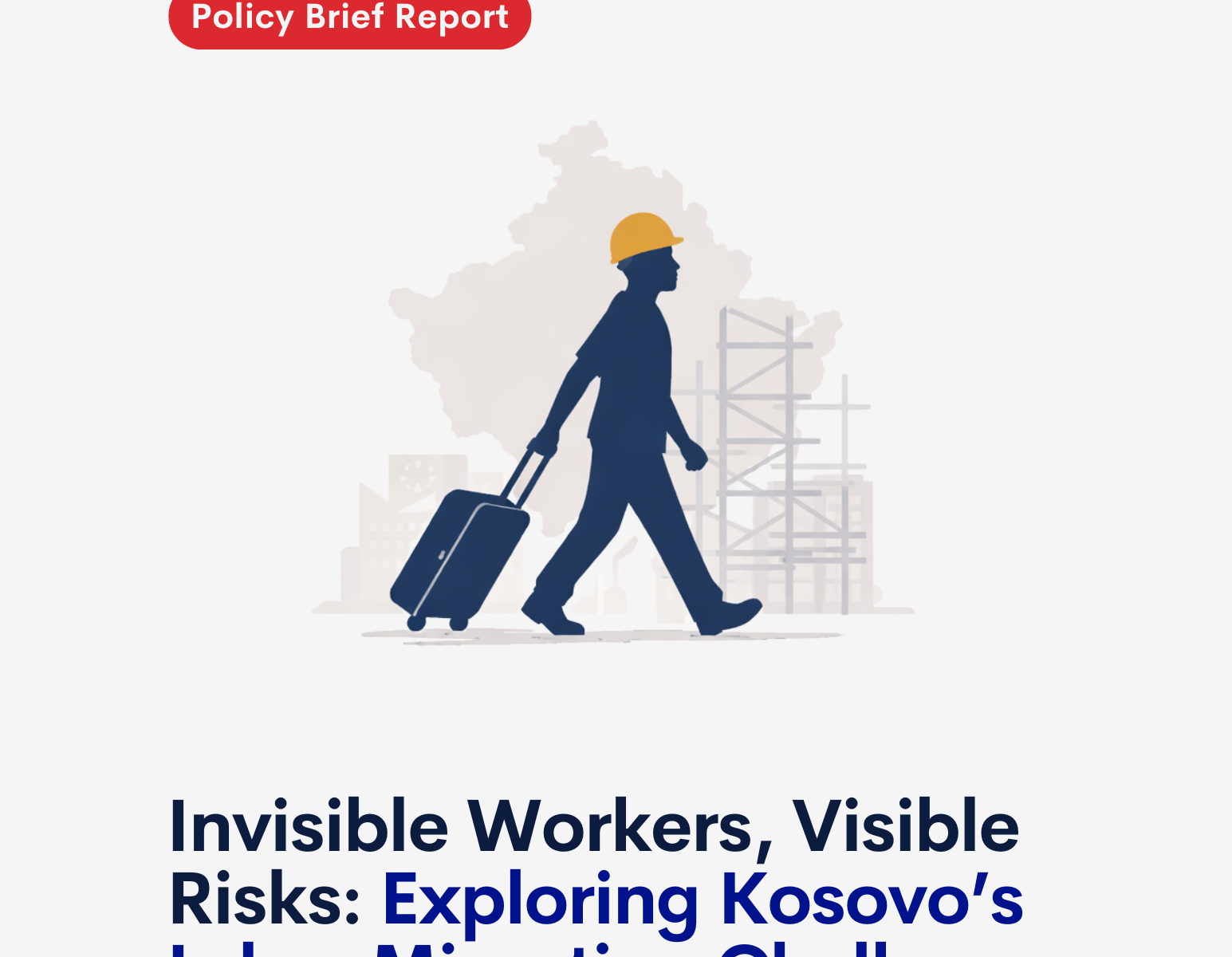
Invisible Workers, Visible Risks: Exploring Kosovo’s Labor Migration Challenges

Invisible Workers, Visible Risks: Exploring Kosovo’s Labor Migration Challenges

Introduction

Kosovo has long been recognized as a country of emigration and diaspora. In recent years, however, the country has begun to emerge as a destination for migrant workers, marking a significant shift from its traditional role as a transit corridor to Europe. There is limited research on the factors driving this transformation, yet it is clear that the Kosovo labor market is experiencing significant changes, both internally and in response to global trends. Labor shortages in key sectors have increased the demand for foreign workers, particularly from the Global South. While this influx addresses immediate economic needs, it has also revealed gaps in legal, institutional, and social frameworks that leave certain groups vulnerable to invisibility, exploitation, and systemic exclusion due to the lack of clear regulation and oversight.

Migration Trends and Statistics

The available data reveal not only a quantitative rise in labor migration to Kosovo but also a transformation in its dynamics. In 2018, the country registered 594 migrant workers; by 2021 this figure had more than doubled to 1,487 (IOM, 2023), signaling that Kosovo was becoming more than a transit point. The issuance of work permits followed a similar trajectory. In 2020, authorities granted 477 permits, whereas in 2022 the number reached 1,063 (MIA, 2022), demonstrating an institutional recognition of growing labor market needs. The pace of change has accelerated further: in the second quarter of 2024 alone, 1,918 new applications for work permits were filed, predominantly by citizens of Turkey, Bangladesh, the Philippines, and Nepal (MIA, 2024). In the third quarter of 2024, there were 912 temporary residence permits for work purposes that were issued, with the majority of applicants being from Turkey, Serbia and North Macedonia. (MIA, 2024) In the fourth quarter of 2024, there were 1104 temporary residence permits for work purposes that were issued, with the biggest number of applicants being from Turkey. (MIA, 2024) In the first quarter of 2025, there were 1224 temporary residence permits issued for work purposes, in the second quarter there were 1365 issued and in the third quarter of 2025 there were 1212 issued. (MIA, 2025) There is an increase of applications in every quarter in 2025 compared to its respective quarter in 2024. Most applicants are from Turkey, Serbia, North Macedonia and Albania. In terms of Filipino workers, most data come from 2024, specifically in the April-June period, with 30 work permit applications and 20 approvals. In the July-September period, there were 32 approved applications. (MIA, 2025)

Yet these figures conceal deeper structural problems. The high volume of applications contrasts sharply with the sluggish pace of approvals, with many permits issued in 2024 corresponding to applications submitted two or even three years earlier. Such delays highlight the administrative bottlenecks of the current system and suggest that the state apparatus is not yet fully equipped to manage the rising demand. Moreover, the distribution of permits underscores inequalities in access to regularization: between January and June 2024, Turkish workers obtained 1,103 permits, Bangladeshi workers 334, while only 20 were issued to Filipinas. This imbalance is not merely numerical but reflects broader policy blind spots, particularly regarding migrant women in domestic and care sectors. Consequently, while migration flows to Kosovo are increasing rapidly, the ability of institutions to process, regulate, and protect these workers has not kept pace, creating fertile ground for informality and exploitation.

Legal and Institutional Framework

The legal framework governing migrant workers in Kosovo appears comprehensive at first glance, but its application reveals important shortcomings. Migrant workers fall under the same protective umbrella as domestic workers through the Labour Law No. 03/L-212 (2009), which guarantees fundamental rights such as written contracts, equal treatment in wages, working hours, and occupational protections (Official Gazette of Kosovo, 2009). Complementing this, the Law No. 04/L-161 on Safety and Health at Work (2013) sets minimum standards for workplace safety, obligating employers to secure the health and well-being of all employees regardless of nationality (Official Gazette of Kosovo, 2013).

Their residency and employment status is regulated by the Law on Foreigners No. 04/L-219 (2013), later amended by Law No. 06/L-036 (2018) and most recently by Law No. 08/L-262 (2023), which together define conditions for entry, stay, and employment of foreign citizens in Kosovo (Official Gazette of Kosovo, 2013; 2018; 2023). Administrative procedures that affect migrant workers, such as applications for work permits and residence rights are further structured by the Law No. 05/L-031 on General Administrative Procedure (2016), which establishes principles of legality, efficiency, and transparency in public administration (Official Gazette of Kosovo, 2016).

To obtain a work permit in Kosovo, individuals and employers must follow specific regulations. According to recruitment agencies in Prishtina, their contract should comply with labor laws and provide a minimum gross wage of 420 euros per month, with possibilities for further remuneration based on the employee’s performance.

On paper, these laws place migrant workers on equal footing with local workers in terms of employment conditions, wages, and social protections. However, in practice, gaps between legislation and implementation are evident. Administrative burdens and prolonged waiting times for work permits undermine the very protections the legal framework promises. Moreover, the absence of a regulatory framework for direct household-based employment leaves a critical sector such as domestic and care work outside the scope of effective labor oversight. As a result, many migrant women employed in private homes operate in a legal vacuum, where protections exist formally but cannot be enforced. This gap illustrates a broader structural challenge: while Kosovo has aligned its legislation with international standards, enforcement capacity and sector-specific provisions remain insufficient, perpetuating invisibility and vulnerability among the most marginalized categories of migrant workers.

Gender and Sectoral Dimensions

The gender and sectoral distribution of migrant workers in Kosovo is neither uniform nor accidental; it reflects broader global dynamics of labor migration as well as domestic gaps in the Kosovar labor market. Workers arriving from Turkey are spread across a relatively balanced range of professions. Men and women alike are represented in healthcare, engineering, education, information technology, and management, with many of them bringing formal qualifications that correspond to Kosovo’s professional shortages. This distribution suggests that migration from Turkey is not only driven by economic necessity but also by targeted recruitment into higher-skilled sectors where Kosovo faces a deficit of trained professionals.

By contrast, Bangladeshi workers, who have historically constituted the largest group using Kosovo as a transit country, are almost exclusively men, employed primarily in physically demanding and low-paid sectors such as construction, infrastructure maintenance, and seasonal labor. Their concentration in these fields reflects both structural demand in Kosovo’s economy and global patterns in which South Asian men are often channeled into low-skilled, labor-intensive roles. This sectoral segmentation has consequences for their living conditions, as many reside in overcrowded accommodations provided by employers, further blurring the line between work and personal life.

Asian workers more broadly, particularly those from Nepal, India, and the Philippines, are concentrated in services such as education, hospitality, and gastronomy. However, the case of Filipino workers stands out as emblematic of gendered migration. Filipino workers are disproportionately represented in domestic and care work, a sector undervalued in Kosovo’s economy but crucial to many households. These women are often employed to provide childcare, eldercare, or household maintenance, filling gaps in the country’s weak social care infrastructure. Their labor is “invisible” in the sense that it occurs behind closed doors, in private homes, beyond the reach of labor inspectors and state institutions.

This feminization of migration in the care sector underscores both global care chains, where women from the Global South migrate to provide care labor in wealthier or labor-deficient countries, and the specific vulnerabilities in Kosovo. Many Filipino workers are excluded from formal contracts due to the absence of legal frameworks for household-based employment. Even when formally employed, they are often misclassified in contracts under unrelated job titles such as “cleaners” or “office assistants” in a company, while in practice performing full-time domestic or care duties. This legal fiction renders them invisible to the system and contributes to their marginalization.

The sectoral and gendered segmentation of migrant workers therefore not only meets Kosovo’s labor market needs but also reproduces hierarchies of gender, class, and nationality. Male workers are pushed into physically demanding but visible roles such as construction, while female workers, especially those from the Philippines, are absorbed into private households, where their labor remains unrecognized and undervalued. This duality exposes the structural dependence of Kosovo’s economy on gendered forms of migration, while simultaneously highlighting the risks of exploitation and invisibility for those working in the most vulnerable sectors.

Key Challenges

The challenges faced by migrant workers in Kosovo are multi-dimensional. One of the first obstacles migrant workers face in Kosovo is bureaucracy in the work permit system. The issue does not necessarily stem from inefficiency within the Ministry of Internal Affairs itself, but from the slowness of the overall process and the lack of inter-institutional coordination. While work permits may take months or even years to be processed, many migrant workers are already employed during this waiting period. However, because institutions such as the Kosovo Tax Administration, the Labour Inspectorate, and the Employment Agency are not digitally connected to the permit system, they often lack real-time information on these workers. This institutional disconnect means that while migrants are actively participating in the labor market, the relevant oversight and monitoring bodies cannot track their status, ensure compliance with labor laws, or guarantee their access to social protections. Thus, the challenge lies not simply in bureaucratic delay, but in the systemic inefficiency of institutional coordination, which allows for legal uncertainty and fosters spaces where informality and exploitation can thrive.

From a legislative standpoint, the issue is also that Kosovo lacks a precise legal definition of domestic workers which impacts a large part of migrant workers who work in the domestic care sector. As a result, the majority of migrant workers who work as domestic workers, lack proper labor and social protection because the legal framework pertaining to formal employees only applies to domestic workers under contract.  Workers are particularly vulnerable in this situation because the majority of domestic work is really unreported. According to a survey published by IOM in 2023, 58% of the migrant workers questioned in Kosovo applied for their jobs via a recruitment agency.  The majority paid the charge, which averaged 2,800 EUR, in their country of origin.  According to 15% of respondents, their employer did not follow the terms and conditions of the agreement. Additionally, before arriving, migrants lacked access to information that should have assisted them to become ready for life and work in the region, and there was a lack of support services accessible after they arrived. According to the 2023 IOM report, few services available to the local population have adapted the needs of the newcomers. Migrants also cited three major needs which were mainly stable accommodation, food and health services.

Another significant challenge concerns professional qualifications. In Kosovo, the formal recognition of degrees is not always required, which creates a situation where highly skilled migrant workers, such as doctors or other professionals from countries like Turkey, sometimes work in positions for which they do not have verified credentials. This mismatch between qualifications and practice can limit professional development, affect labor market efficiency, and raise broader questions about public safety and regulatory oversight.

The invisibility of migrant workers, particularly women employed in care roles, raises complex questions about systemic human rights protections. Without formal legal recognition or robust monitoring mechanisms, these workers may experience conditions in which exploitation becomes normalized and accountability is limited. This situation invites inquiry into how entrenched gender norms and the social undervaluation of care work contribute to broader patterns of exclusion and vulnerability. At the same time, the challenges faced by Kosovo’s institutions in addressing these dynamics suggest gaps in the country’s labor governance framework, highlighting potential risks to both domestic labor standards and international perceptions of compliance with human rights obligations.

Policy Recommendations

Kosovo faces complex challenges in governing labor migration, particularly in the context of household and care work. The invisibility of migrant workers, especially women, raises systemic human rights concerns, highlighting the need for both legal and institutional reforms. There are large protection gaps as a result of the misalignment between the actual employment circumstances of many migrant workers and the provisions of labor and social protection laws. Strengthening governance requires not only streamlining administrative processes for timely issuance of work permits but also developing a legal framework that formalizes domestic and care work, thereby addressing entrenched gender inequalities and reducing vulnerability to exploitation.

Effective monitoring and enforcement remain crucial. Labor inspections could be reinforced, complemented by alternative oversight models suitable for private households. Clear prohibitions on practices such as passport confiscation and stricter regulation of recruitment agencies are necessary. At the same time, worker empowerment through safe reporting channels, legal aid, interpretation services, and systematic awareness campaigns, can mitigate risks associated with undocumented or informal employment. Employers, partners, and recruiting agencies can assist migrants in obtaining accurate information and preparing for their arrival. Host towns and local organizations can play an important role in integrating and retaining labor migrants and their families over time.

Institutional coordination is another key dimension. While Kosovo’s Ministry of Internal Affairs has well-structured procedures, slow inter-agency communication limits timely data sharing among the Tax Administration, Inspectorate of Labour, and Employment Agency, reducing the effectiveness of workforce management (European Commission, 2023; World Bank, 2022). Exploring ways to integrate these systems and improve real-time information flow could enhance both worker protection and regulatory compliance.

Finally, Kosovo could strengthen protections for migrant workers and enhance labor market governance by negotiating bilateral employment agreements with countries that are key sources of labor, such as the Philippines, Bangladesh, and Turkey. Such agreements would facilitate the legal recruitment of workers, ensure mutual recognition of qualifications where appropriate, and establish clear frameworks for rights, obligations, and dispute resolution. In addition, bilateral agreements could provide mechanisms to monitor working conditions, prevent exploitation, and improve coordination between sending and receiving countries. By formalizing these arrangements, Kosovo would not only safeguard migrant workers but also enhance the transparency, efficiency, and international credibility of its labor migration system.

Areas for Exploration and Actionable Strategies

Kosovo’s governance of labor migration raises several critical questions. How can administrative processes be restructured to ensure timely issuance of work permits while also protecting migrant workers, particularly women in domestic and care roles, from exploitation? To what extent could legal reforms that formalize household employment help reduce the invisibility of these workers and address systemic gender inequalities?

Monitoring and enforcement also merit reflection. What models of oversight are most effective for work performed in private households, and how can labor inspections be complemented without imposing undue burdens? How can practices such as passport confiscation be systematically prevented, and what regulatory frameworks for recruitment agencies would both protect workers and ensure accountability?

Worker empowerment remains central. Which mechanisms such as safe reporting channels, legal aid, interpretation services, or awareness campaigns, are most effective in enabling undocumented or informal workers to claim their rights? How might institutional coordination between the Ministry of Internal Affairs, the Tax Administration, the Inspectorate of Labour, and the Employment Agency be improved, given current inefficiencies in data sharing and inter-agency communication (European Commission, 2023; World Bank, 2022)?

Finally, what role could international engagement play in strengthening protections for migrant workers? Could bilateral labor agreements and mutual recognition of qualifications with sending countries such as the Philippines and Bangladesh serve as effective tools to enhance both worker protection and Kosovo’s international      reputation?

References

European Commission.  (2023). Kosovo Progress Report. Brussels: European Commission.

World Bank. (2022). Kosovo: Public Administration and Institutional Efficiency Report. Washington, DC: World Bank.

World Bank. (2023). Unlocking the Development Potential of Migration in the Western Balkans. Washington, DC: World Bank.

International Organization for Migration (IOM). (2024). World Migration Report 2024. Geneva: IOM.

OECD. (2023). Labour Migration in the Western Balkans: Trends and Policy Challenges. Paris: Organisation for Economic Co-operation and Development.

Assembly of Kosovo. (2010). Law No. 03/L-212 on Labour. Official Gazette of the Republic of Kosovo, No. 90. Retrieved from https://gzk.rks-gov.net/ActDetail.aspx?ActID=2735&langid=2

International Organization for Migration. (2025). Labour Mobility Strategy in the Western Balkans. Geneva: IOM.

International Organization for Migration. (2024). Flow Monitoring Surveys (FMS): Kosovo. Geneva: IOM

Official Gazette of Kosovo (2013). Law No. 04/L-161 on Safety and Health at Work.

Official Gazette of Kosovo (2013). Law No. 04/L-219 on Foreigners.

Official Gazette of Kosovo (2016). Law No. 05/L-031 on General Administrative Procedure.

Official Gazette of Kosovo (2018). Law No. 06/L-036 amending Law on Foreigners.

Official Gazette of Kosovo (2023). Law No. 08/L-262 amending Law on Foreigners.

Ministry of Internal Affairs, Republic of Kosovo. (2024). Raporti Statistikor K3 2024 DSHAM / MPB. Asylum and Migration, Division for Migration Data Management. Retrieved from Publikime e MPBAP

Ministry of Internal Affairs, Republic of Kosovo. (2024). Raporti Statistikor K4 2024 — DSHAM / MPB. Department of Citizenship, Asylum and Migration, Ministry of Internal Affairs. Retrieved from https://mpb.rks-gov.net/f/40/Publikime

Ministry of Internal Affairs, Republic of Kosovo. (2025). Të dhënat statistikore Janar–Mars 2024/2025 (TM1 2024-2025). Department of Citizenship, Asylum and Migration, Ministry of Internal Affairs. Retrieved from Publikime e MPBAP

Ministry of Internal Affairs, Republic of Kosovo. (2025). TM3 2024-2025 Alb: Të dhënat statistikore (Korrik-Shtator 2024/2025). Department of Citizenship, Asylum & Migration, Ministry of Internal Affairs. Retrieved from Publikime e MPBAP

Ministry of Internal Affairs, Republic of Kosovo. (2025). TM2 2024‑2025 Alb: Të dhënat statistikore (Prill‑Qershor 2024/2025). Department of Citizenship, Asylum and Migration, Ministry of Internal Affairs. Retrieved from https://mpb.rks-gov.net/f/40/Publikime
Invisible Workers, Visible Risks: Exploring Kosovo’s Labor Migration Challenges
Read the Report Here

Invisible Women in Northern Kosovo

The absence of civil documentation has long been recognized as one of the most serious structural obstacles to the consolidation of Kosovo’s institutions. Documentation is not only a bureaucratic tool; it is the foundation of citizenship, the entry point to exercising political rights, accessing education and healthcare, and participating in the labor market. The European Union has repeatedly emphasized in its Progress Reports that Kosovo must strengthen its civil registry and guarantee inclusion, particularly for vulnerable groups, if it is to advance toward accession. Yet, more than two decades after the war, significant categories of residents remain invisible to the state. Among them, Albanian women from Shkodra who married Serbian men in the north of Kosovo represent a striking case of institutional neglect and gendered exclusion.

The roots of this phenomenon lie in the post-war reality of Kosovo’s north, where Serbian parallel structures operated for years, offering documents, social assistance, and health services, but outside Kosovo’s legal framework. For residents of the region, and especially for women migrating from Albania, this created a dual and often contradictory reality. They lived in Kosovo, raised families there, and contributed to rural life, but legally they were recognized only through Serbian documents. Kosovo institutions, lacking access to the territory or the political will to intervene, did not establish systematic procedures to integrate them into the national registry. The result is a generation of women—wives, mothers, and workers—who remain without the legal recognition of the state in which they live.

The motivations behind these marriages were complex but often rooted in poverty and limited opportunities. In rural Shkodra, many families viewed marriage into northern Kosovo as a chance for their daughters to secure stability. Intermediaries and informal agencies reinforced this perception, promising decent living conditions and reliable husbands. In reality, many of these women encountered harsh economic conditions, patriarchal traditions, and isolation. Their stories reflect not only individual hardships but also broader structural failures, where migration across a contested border produced a new category of stateless or semi-stateless individuals.

Dukata’s story illustrates these dynamics vividly. After marrying into Gornje Jasenovik, she spent nearly a decade in a single room without running water. She recalls that what was promised to her family—a stable household, modern conditions—was never realized. Today, while her husband and children possess Kosovo documents, she remains excluded. Without identification, she cannot seek employment or apply for social benefits, leaving her dependent on subsistence farming and unpaid domestic work. File Bishevac, a widow in Jabuk, raises her two children alone. Although she contributes daily through agricultural labor, her work is invisible to institutions, and she survives only on minimal Serbian assistance. Diella, married to Boshko, has never managed to obtain Kosovo documents; her Serbian ID allows her to cross borders but does not enable her to participate in Kosovo’s legal or social systems.

These narratives reveal the profound disjuncture between life as lived and life as recognized by the law. For these women, marriage created a path to a new family but also a barrier to citizenship. They became simultaneously insiders—mothers and wives raising children in Kosovo—and outsiders, excluded from the rights and protections of Kosovo’s legal order.

Institutional estimates underscore the scale of the problem. The Director of Health in Zubin Potok, Gordana Mihajlović, has stated that around 50 Albanian women married to Serbs in the municipality remain undocumented even after 20–22 years of residence. In a training organized by the Regional Development Agency North, of 80 women who participated, 50 were Albanian citizens in the same condition—unemployed, undocumented, and living in rural poverty. According to Mayor Izmir Zeqiri, the real number may be significantly higher, potentially involving hundreds of women and children. These figures suggest that what appears as isolated hardship is in fact a structural pattern of exclusion.

The implications for human rights are severe. International standards are unambiguous: Article 6 of the Universal Declaration of Human Rights recognizes the right of every person to legal recognition. The International Covenant on Civil and Political Rights (ICCPR) guarantees the right to be recognized everywhere as a person before the law. The Convention on the Elimination of All Forms of Discrimination against Women (CEDAW) specifically obliges states to ensure that women enjoy equal access to employment, education, and social services. By leaving these women outside he civil registry, Kosovo violates these commitments. Moreover, the exclusion is gendered: it is women, not men, who overwhelmingly remain undocumented, reflecting both patriarchal family structures and institutional neglect.

The consequences for labor rights are equally troubling. Without documentation, women cannot enter formal employment, register businesses, or benefit from labor protections. Their economic activity is confined to unpaid domestic work and informal agricultural labor. File’s narrative illustrates this invisibility: despite contributing daily to her family’s survival, her labor remains outside the scope of recognition and protection. Dukata’s frustration at being unable to apply for jobs captures the systemic nature of this exclusion. This is not simply a matter of poverty; it is a denial of the right to work, enshrined in the International Labour Organization (ILO) Conventions and recognized in the European Social Charter.

The intergenerational effects magnify the injustice. Children of undocumented women often face challenges in enrolling in school or accessing healthcare. Without birth registration tied to valid documents, they risk inheriting the same exclusion as their mothers. This creates a cycle of marginalization that perpetuates inequality across generations. For a young state like Kosovo, which aspires to EU membership, such systemic exclusion undermines the credibility of its commitment to the rule of law and human rights.

The political consequences are also significant. As long as women remain undocumented, Kosovo’s institutions project an image of weakness and selective governance. Failure to integrate these women not only damages the lives of individuals and families but also challenges Kosovo’s international reputation. In the context of EU integration, where protection of minority rights, gender equality, and social inclusion are core benchmarks, this problem cannot remain unresolved.

International and regional practices provide clear models for solutions. Bosnia and Herzegovina deployed mobile registration units and enacted special laws to resolve the status of displaced persons. North Macedonia in 2012 introduced a legal pathway for stateless persons to obtain documentation, while Montenegro developed targeted measures for women and children. Kosovo can adapt these experiences by designing context-specific policies for the north, ensuring that women married into Serbian families are not left outside the legal framework.

Në fund, kjo nuk është thjesht një çështje dokumentesh. Është një çështje dinjiteti, barazie dhe njohjeje të plotë qytetare. Këto gra nuk janë të padukshme në komunitetet ku jetojnë – ato janë nëna që rrisin fëmijë, punëtore që punojnë në arë, kontribuese në jetën rurale. Ato janë të padukshme vetëm për shtetin, i cili nuk i ka njohur ligjërisht. Për Kosovën, adresimi i kësaj gjendjeje është një domosdoshmëri ligjore, politike dhe morale.

Recommendations for Kosovo’s Institutions

  1. Adopt a special law for the documentation of Albanian women married in northern municipalities, introducing simplified procedures, administrative amnesty, and recognition of marriages conducted in Serbia.
  2. Establish accelerated documentation procedures with clear deadlines and reduced bureaucratic barriers, ensuring transparent criteria for eligibility.
  3. Deploy mobile civil registration units and provide free legal aid in northern villages, reaching women directly where they live.
  4. Ensure immediate access to healthcare, social protection, and education for women and their children once documentation is issued, guaranteeing that rights materialize in practice.
  5. Develop targeted employment and empowerment programs for affected women, including vocational training, subsidies for employers, and support for entrepreneurship.
  6. Create an inter-institutional monitoring mechanism linking the Government of Kosovo, municipal authorities, and civil society, tasked with tracking progress and publishing annual reports.
  7. Launch bilingual awareness campaigns (in Albanian and Serbian) to inform women of their rights, the procedures available, and the institutions responsible, reducing dependence on informal networks.